The gaming industry is changing in big ways. These aren’t just small updates or minor spec bumps. These changes could reshape how studios make, sell, and deliver games. The global market is projected to hit around $522 billion by the end of 2025, and mobile gaming brings in more than half of that revenue. The industry’s economics are shifting in ways nobody could have predicted two years ago.
Cloud Gaming Infrastructure Is Maturing
For years, cloud gaming felt like one of those technologies that was always “just around the corner.” But the infrastructure is catching up now. Services like NVIDIA GeForce Now, Xbox Cloud Gaming, and Amazon Luna stream graphics-heavy games to devices that normally couldn’t run them. You can play AAA games on a phone or a budget laptop, even without a strong GPU inside it.
Market projections suggest cloud gaming revenue could reach $10.5 billion in 2025 and possibly double by 2029. Some analysts even project figures as high as $159 billion by 2032. Still, it’s wise to treat these long-term forecasts with caution.
What’s making this possible? Edge computing processes data closer to users, so there’s less lag. 5G networks and Wi-Fi 7 are rolling out too. Advanced compression codecs like AV1 and H.266 VVC are cutting bandwidth needs by a lot. The technology behind cloud gaming is finally coming together.
Smaller services are showing up too. Moonlight PC lets you stream games from your gaming PC to other devices. There’s no subscription — you just use the hardware you already own. AirGPU rents out high-performance rigs by the hour, which works like a cloud PC without the big upfront cost. These smaller options fill gaps that the major platforms haven’t covered.
Challenges remain, though. A stable internet connection matters more than ever. Latency is improving, but it’s still a problem for competitive gaming. Many regions still have bandwidth caps. Rural areas often lack the infrastructure needed to run this smoothly. Cloud gaming won’t work for everyone, but it’s becoming a real option for certain groups—especially mobile-first markets or casual players who want more flexibility.
Hardware could change as a result. If data centers handle the heavy lifting, local devices might focus more on comfort, screen quality, and connectivity instead of raw processing power.
VR and AR: Approaching Mainstream Adoption
VR has been “about to go mainstream” for over a decade now. But the technology is finally catching up to the promise. That makes mass adoption look more likely than ever.
Current headsets like Meta Quest 3 offer wireless play with built-in tracking, so you don’t need outside sensors. Apple Vision Pro blends AR and VR with advanced eye tracking and spatial computing. Sony’s PlayStation VR2 offers 4K HDR displays, haptic feedback, and exclusive games. The hardware keeps getting lighter and more comfortable, with less need for external sensors or cables.
Frame rates now push past 180Hz, which cuts down on motion sickness — a problem that has long kept people away from VR. Eye tracking and foveated rendering boost performance by rendering detail only where you’re actually looking. These small improvements add up to a noticeably better experience.
AI plays a big role here too. VR environments can adapt in real time based on what players do. NPCs now read voice commands and react to gameplay choices as they happen. AI algorithms are also improving how the system tracks hand, body, and eye movement.
AR hasn’t caught on much beyond Pokémon GO, but companies like Niantic, Apple, and Microsoft are pouring money into AR glasses that blend digital overlays with the real world. The ideas sound great on paper — strategy games on your dining table, location-based experiences, handy overlays for everyday tasks. Nobody has proven they can pull it off well yet.
One trend worth watching: the lines between console, PC, and VR platforms are blurring. Hardware makers are building more flexible devices, like hybrid controllers, modular parts, and universal accessories that work across formats.
AI Integration Across Gaming
AI’s impact on gaming touches many areas, and it works better in some than others.
About one in three developers now use generative AI tools in their workflow. Uses range from procedural content generation, where AI builds levels, landscapes, and challenges on its own, to art creation, dialogue writing, and QA testing, where AI mimics player actions to find bugs.
For NPCs, modern systems use large language models and reinforcement learning to create more lifelike behavior. NPCs can adjust to the situation, learn from how players play, and hold natural conversations. Some systems even read player emotions and choices to react in more fitting ways.
Personalization is another use case. AI tracks what players do and adjusts difficulty in real time. It also builds unique story paths based on player choices and hands out rewards that match what each player likes. This lets games adapt to different skill levels and play styles, though how well it works varies a lot from game to game.
Graphics show AI’s impact the most clearly. NVIDIA’s DLSS (Deep Learning Super Sampling) uses AI upscaling to make lower-resolution images look like native 4K, without pushing the hardware as hard. NVIDIA announced DLSS 4 at CES 2025. AMD’s rival FSR (FidelityFX Super Resolution) offers similar benefits. These tools are turning into standard features instead of premium extras.
AI-powered ray tracing creates photorealistic lighting, shadows, and reflections. The performance gains are big — you get better visuals without needing a matching hardware upgrade. That matters most for players running mid-range systems.
Future developments include fully AI-generated worlds, where environments, dialogue, and objectives get created on the fly. AI game assistants that offer real-time hints tailored to each player are coming too. So are ultra-realistic NPCs that change over time based on how they interact with you.
Next-Generation Console Hardware
Both Microsoft and Sony appear to be getting ready for next-generation hardware launches. These could arrive as early as late 2026 to 2027, though the timelines could still change.
The next Xbox, reportedly codenamed “Magnus,” may use an AMD Zen 6 CPU and an AMD RDNA 5 GPU with around 68 compute units — roughly on par with an NVIDIA RTX 5080. It’s targeting native 4K at 120fps with better ray tracing. It will use AMD FSR for upscaling instead of a proprietary AI upscaler like PlayStation’s PSSR. Full backwards compatibility with the Xbox Series X/S library is expected.
Microsoft’s overall strategy may matter more than the specs. Reports say the company is developing OEM console-PC hybrids that could launch as early as 2026, possibly with partners like Asus, Lenovo, or Razer. These devices would bridge console and PC gaming and might even let you side-load PC storefronts like Steam and Epic Games. That would be a big break from the traditional console model.
We know less about PlayStation 6’s specs. Expected specs include AMD Zen 6 cores and an AMD RDNA 5 GPU with around 40-48 compute units. The design approach reportedly follows the PS4 playbook — better than the PS5 Pro, but priced for wide adoption. AMD is said to be pushing for shared architecture between Xbox and PlayStation to cut costs on both sides.
Sony may also be building a handheld version with lower specs, offering roughly half the rasterization power of the PS5. The PS6 itself is aimed at gamers first, with a strong lineup of first-party titles, and could launch in 2027.
Cost is a big factor here. With advanced chip processes (TSMC 3nm or 2nm), AI cores, larger SSDs, and premium cooling, launch prices could go higher than the current generation. The PS5 Pro launched at $700; next-gen consoles might range from $600 to $800 or more depending on configuration. That price tag could hold back adoption, especially if the economy stays shaky.
GPU Technology: Competitive Landscape
NVIDIA still leads the GPU market, but the competition is heating up.
NVIDIA’s roadmap through 2028 is bold. Blackwell Ultra (B300 Series) in 2025 promises a 50% performance boost with up to 288GB of HBM4E memory. The Vera Rubin architecture arrives in 2026, built on the TSMC 3nm process. CEO Jensen Huang calls it a major step forward. By 2027, the VR300 NVL576 system could deliver 21 times the performance of today’s GB200 systems. Feynman GPUs are planned for 2028.
These chips are built mainly for data centers and AI work, but gaming GPUs still benefit as the technology trickles down.
AMD is fighting back with its Instinct MI450 series. It launches in 2026 with CDNA 5 architecture on the TSMC 2nm process, and it will compete directly with NVIDIA’s Hopper, Blackwell, and Rubin GPUs. Its chiplet-based design gives it an edge in memory capacity and bandwidth for inference workloads. AMD’s partnership with OpenAI will deploy 6 gigawatts of MI450 GPUs starting in the second half of 2026. That deal could bring in over $100 billion in revenue over several years.
Intel is moving into AI GPUs with its Crescent Island GPU, arriving in the second half of 2026. It uses Xe3P microarchitecture built for performance-per-watt and packs 160GB of LPDDR5X memory for inference work. Intel is aiming at a specific niche — ”tokens-as-a-service” providers — instead of trying to compete everywhere.
For gaming, trends include AI-driven overclocking that fine-tunes performance automatically, plus advanced cooling systems that adjust in real time. Ray tracing is turning into a baseline feature rather than a luxury. AI upscaling through DLSS and FSR delivers sharper visuals without a matching jump in hardware cost — probably the most useful near-term upgrade for most gamers.
PC Gaming Hardware: Steady Advancement
PC gaming hardware keeps improving steadily on several fronts.
CPUs are packing in more cores. AMD’s Ryzen 7 9800X3D, released in 2025, has 8 cores and 16 threads with Zen 5 architecture and 3D V-cache. It’s built for gamers who stream, record, and play all at once. The focus is on multitasking — handling heavy workloads without slowing down.
DDR5 RAM is becoming the norm, and it’s getting faster and cheaper. PCIe 5.0 SSDs are cutting load times by a lot. HP OMEN systems now support up to 128GB of DDR5-5600 RAM and 2TB PCIe Gen5 SSDs. Specs that counted as high-end just recently are now standard on premium systems.
Cooling technology is improving too. HP’s OMEN Tempest Cooling uses redesigned fans with extra heat pipes and fan blades, giving 1.49 times more airflow than previous generations. AI-powered optimization detects what game you’re playing and adjusts settings on its own. Built-in fan cleaning means you don’t have to maintain it by hand. These are small quality-of-life upgrades that matter for keeping performance steady over time.
Peripherals are where competitive gaming shapes hardware design most directly. The cutting edge includes ultra-responsive mice with polling rates beyond 8,000Hz, optical-mechanical keyboards that mix speed with a tactile feel, spatial audio headsets tuned for esports, and high refresh rate monitors that push past 480Hz for pro setups. Much of this tech eventually makes its way into everyday consumer products.
Haptic feedback in controllers and other peripherals now delivers a richer sense of touch. Wi-Fi 7 adoption is cutting down latency in competitive play. Progress here comes from small improvements across many areas, not one big breakthrough.
One trend worth watching: modular and customizable hardware that’s easier to build, change, and upgrade. Swappable GPU docks, magnetic keyboard switches, user-upgradable VR headset parts, hot-swappable laptop batteries, and 3D-printable case panels are all starting to show up. Some companies are even testing subscription-based upgrades, like renting a better GPU or extra memory. This idea tackles the problem of PC parts becoming outdated fast, which is part of what makes PC gaming expensive.
Mobile Gaming’s Market Dominance
Mobile gaming makes up over 50% of the $522 billion global gaming market. That’s a huge factor people often overlook when they talk about console or PC gaming.
Mobile chips like Apple’s A17 Pro and Qualcomm’s Snapdragon G-series now support ray tracing, mesh shading, and dynamic performance scaling on phones. Console-quality graphics on mobile is no longer just a dream — flagship phones can actually deliver it.
Cross-platform progression, where players pick up right where they left off across mobile, console, and PC, is becoming standard. 5G optimization lets mobile games use ultra-low latency for real-time multiplayer and AR experiences. The infrastructure now supports increasingly demanding mobile games.
Mobile gamers look different from traditional gaming audiences — they have different expectations, different ways of paying, and different habits. The industry is following the money, and that increasingly means building games mobile-first or at least mobile-friendly.
Cross-Platform Play as Standard
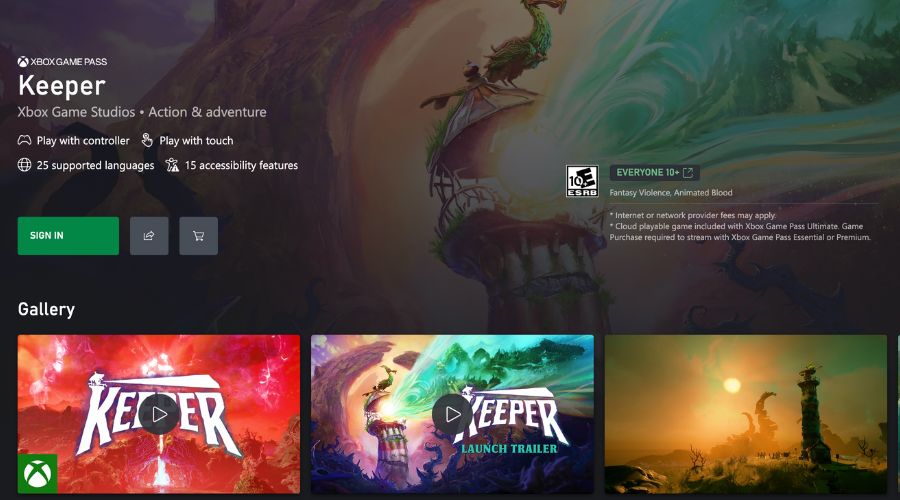
Cross-platform gaming has gone from a nice extra to an expected feature. Games like Fortnite, Call of Duty: Warzone, and Rocket League connect players across every platform. Developers get bigger audiences and games that last longer. Players get bigger matchmaking pools and can play with friends no matter what platform they use.
Balancing gameplay between different control schemes — controller versus mouse and keyboard — is still a challenge. Fair competition gets complicated when one input method gives players an edge. Some games handle this with matchmaking or lobbies split by input type.
The trend is clear: platform-exclusive multiplayer is now the exception, not the rule. Publishers want the biggest player base possible, and which platform you use matters less once everyone plays together.
Sustainability in Gaming Hardware
Environmental responsibility is turning from a PR talking point into a real competitive factor in some markets. Energy-efficient parts in consoles and PCs, recyclable materials, eco-friendly packaging, sustainable manufacturing, and carbon-neutral data centers for cloud gaming are all becoming standard expectations.
Consumers in eco-conscious markets are actively picking brands with clear environmental policies. This group is large enough to sway market share in certain regions, so companies are responding to it.
Gaming’s carbon footprint is big. Energy-hungry data centers, manufacturing, e-waste from hardware upgrades, and power use from gaming systems all add up. Balancing innovation with sustainability is still an ongoing challenge, but the industry is starting to take it more seriously.

Future Developments: Likely Trends
A few trends look likely to continue over the next few years.
Cloud gaming growth will keep going, as long as infrastructure keeps improving. By 2030, for many gamers, your internet connection may matter more than your hardware specs. Devices could become simpler, focusing on comfort, screen quality, and connectivity instead of raw processing power.
AI will become a standard part of hardware. Smart cooling systems and AI-enhanced resolution scaling, motherboards with onboard AI that manages voltage and RAM, and console AI profiles that personalize the UI and adjust difficulty will all become common.
VR/AR adoption may finally reach the mainstream. The path ahead looks like this: 180Hz+ frame rates as the norm, lighter wireless headsets, eye tracking and foveated rendering for smoother experiences, and AR glasses that might replace headsets for casual use. The technology has genuinely improved compared to previous generations.
Gaming hardware markets will keep evolving toward devices built for streaming rather than local processing, subscription-based upgrades instead of buying whole new systems, modular designs that let you upgrade single parts, and sustainability-first design that consumers expect. Whether these ideas become the norm or stay niche depends on how many people adopt them.
Persistent Challenges
Latency in cloud gaming is still a problem for competitive play, even with all the improvements. 5G/6G rollout, edge computing, AI-powered latency compensation, and more regional data centers all help, but physical limits still get in the way.
The digital divide keeps creating barriers. Cloud gaming needs high-speed internet, and that creates accessibility problems. Bandwidth caps, rural and developing markets without the right infrastructure, and the cost of premium internet service all limit who can use it. Technology alone doesn’t fix social and economic inequality.
AI ethics in gaming raises real questions about creative authenticity, job losses for artists and designers, bias baked into AI-trained systems, and intellectual property rights. The industry keeps moving forward with AI, but these ethical questions still don’t have clear answers.
The environmental impact keeps growing despite sustainability efforts. The industry has to balance innovation with its environmental commitments, and right now, innovation is winning out by a wide margin.
The Current State of Gaming Technology
Gaming technology in 2025-2026 is in transition. Cloud infrastructure is improving but still not perfect. AI integration is expanding but raising new questions. VR/AR is finally viable but not yet everywhere. And next-gen hardware is coming, but it won’t be cheap.
The global gaming market’s projected $522 billion valuation stands for more than entertainment — it’s a testbed for new technology. Innovations in AI, cloud computing, graphics processing, and immersive experiences often show up in gaming first, then spread to other industries. That pattern looks likely to continue.
For gamers, developers, and hardware makers, the next few years will likely mean today’s trends reaching maturity. The boundaries between console, PC, mobile, and cloud gaming keep blurring. Accessibility keeps improving. Performance keeps advancing. Cost still stands in the way of cutting-edge experiences.
The technology keeps advancing. What matters most is whether it’s moving in a direction that actually improves the gaming experience, not just the spec sheet. In the end, users will decide this through the choices they make and how they engage with these new technologies.