The gaming industry is shifting in substantial ways. Not just incremental updates or minor spec bumps—we’re looking at changes that could reshape how games get made, distributed, and played. The global market is projected to hit around $522 billion by the end of 2025, with mobile gaming pulling more than half that revenue. The industry economics are reshaping in ways that weren’t predictable even two years ago.
클라우드 게이밍 인프라가 성숙해지고 있다
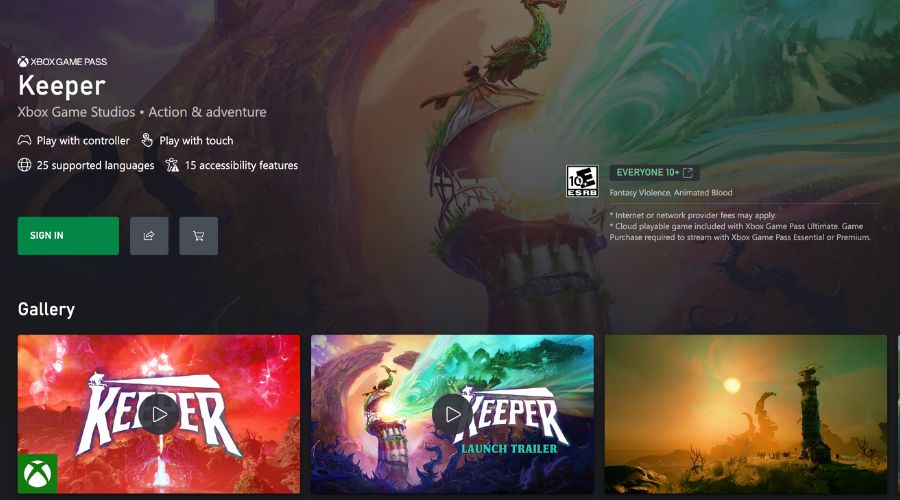
For years, cloud gaming felt like one of those technologies that was always “just around the corner.” But the infrastructure is catching up now. Services like NVIDIA GeForce Now, Xbox Cloud Gaming, and Amazon Luna are streaming graphically intensive titles to devices that couldn’t traditionally handle them. You can play AAA games on a phone or a budget laptop without the GPU to back it up locally.
Market projections suggest cloud gaming revenue could reach $10.5 billion in 2025 and potentially double by 2029. Some analysts project figures as high as $159 billion by 2032, though long-term projections should be viewed with appropriate caution.
What’s making this possible? Edge computing is processing data closer to users, reducing latency. 5G networks and Wi-Fi 7 are rolling out. Advanced compression codecs like AV1 and H.266 VVC are cutting bandwidth requirements significantly. The technological foundation is coming together.
Smaller services are emerging too. Moonlight PC lets you stream games from your gaming PC to other devices—no subscription, just your existing hardware. AirGPU offers hourly rental of high-performance rigs, essentially cloud PCs without the upfront investment. These niche options are filling gaps the major platforms haven’t addressed.
Challenges remain, however. Internet stability is more critical than ever. Latency is improving but still problematic for competitive gaming. Bandwidth caps exist in many regions. Rural areas often lack the necessary infrastructure. Cloud gaming isn’t a universal solution, but for certain use cases—particularly mobile-first markets or casual players seeking flexibility—it’s becoming increasingly viable.
Hardware could shift as a result. If the heavy lifting happens in data centers, local devices might focus more on ergonomics, display quality, and connectivity rather than raw processing power.
VR과 AR: 주류 채택에 접근 중
VR has been “about to go mainstream” for over a decade. But the technology is finally catching up to the promise, making mass adoption increasingly plausible.
Current headsets like Meta Quest 3 offer wireless experiences with inside-out tracking. Apple Vision Pro blends AR and VR with advanced eye tracking and spatial computing. Sony’s PlayStation VR2 provides 4K HDR displays, haptic feedback, and exclusive game libraries. The hardware is becoming lighter, more comfortable, and less reliant on external sensors or cables.
Frame rates are pushing past 180Hz, reducing motion sickness—a persistent barrier to adoption. Eye tracking and foveated rendering are improving performance by rendering detail only where users are actually looking. These incremental improvements are creating measurably better experiences.
AI is playing a significant role. VR environments can adapt in real-time based on player actions. NPCs interpret voice commands and gameplay decisions dynamically. Motion tracking for hands, body movement, and eyes is being refined through AI algorithms.
AR adoption beyond Pokémon GO has been limited, but companies like Niantic, Apple, and Microsoft are investing heavily in AR glasses that blend digital overlays with the real world. The potential applications—strategy games on your dining table, location-based experiences, practical overlays for everyday tasks—exist in theory, though successful execution remains to be proven.
One emerging trend: the lines between console, PC, and VR platforms are blurring. Hardware manufacturers are building more flexible devices—hybrid controllers, modular components, universal accessories that work across formats.
게임 전반에 걸친 AI 통합
AI’s impact on gaming spans multiple areas with varying degrees of success.
Approximately one in three developers now use generative AI tools in their workflow. Applications range from procedural content generation—AI creating levels, landscapes, and challenges automatically—to art asset creation, dialogue generation, and QA testing where AI simulates player actions to identify bugs.
For NPCs, modern systems use large language models and reinforcement learning to create more dynamic behaviors. NPCs can adapt situationally, learn from player strategies, and engage in natural language dialogue. Some systems interpret player emotions and choices to create more responsive interactions.
Personalization is another application. AI monitors player activity and adjusts difficulty in real-time, creates unique story arcs based on choices, and provides tailored rewards matching player preferences. This enables games that adapt to individual skill levels and playstyles, though implementation quality varies significantly.
Graphics represent AI’s most visible impact. NVIDIA’s DLSS (Deep Learning Super Sampling) uses AI upscaling to make lower-resolution renders appear as native 4K without taxing hardware as heavily. DLSS 4 was announced at CES 2025. AMD’s competing FSR (FidelityFX Super Resolution) provides similar benefits. These technologies are becoming standard rather than premium features.
AI-powered ray tracing creates photorealistic lighting, shadows, and reflections. Performance gains are substantial—delivering better visuals without proportional hardware upgrades. This is particularly meaningful for players on mid-range systems.
Future developments include fully AI-generated worlds where environments, dialogues, and objectives are created dynamically, AI game assistants offering real-time hints tailored to individual players, and ultra-realistic NPCs that evolve over time based on interactions.
차세대 콘솔 하드웨어
마이크로소프트와 소니는 2026년 말에서 2027년 초에 차세대 하드웨어 출시를 준비하는 것으로 보이지만, 이러한 일정은 변경될 수 있습니다.
The next Xbox, reportedly codenamed “Magnus,” may feature AMD Zen 6 CPU architecture and AMD RDNA 5 GPU with approximately 68 compute units—roughly equivalent to an NVIDIA RTX 5080. Target performance is native 4K at 120fps with improved ray tracing capabilities. It will use AMD FSR for upscaling rather than proprietary AI upscaling like PlayStation’s PSSR. Full backwards compatibility with Xbox Series X/S libraries is expected.
마이크로소프트의 전략은 사양보다 더 중요할 수 있습니다. 보고서에 따르면, 그들은 2026년 초에 출시될 OEM 콘솔-PC 하이브리드를 개발 중이며, Asus, Lenovo, Razer와 같은 회사와 협력할 가능성이 있습니다. 이러한 장치는 콘솔과 PC 게임을 연결하고 Steam 및 Epic Games와 같은 PC 스토어프론트의 사이드 로딩을 지원할 수 있습니다. 이는 전통적인 콘솔 모델에서의 상당한 이탈을 나타냅니다.
PlayStation 6 specifications are less detailed. Expected specs include AMD Zen 6 cores and AMD RDNA 5 GPU with approximately 40-48 compute units. The design philosophy reportedly mirrors the PS4 approach—better capabilities than PS5 Pro but cost-optimized for mass adoption. AMD is allegedly pushing for shared architecture between Xbox and PlayStation to achieve economies of scale.
소니는 PS5의 절반 정도의 래스터화 성능을 제공하는 사양이 축소된 휴대용 변형을 개발 중일 수도 있습니다. PS6는 강력한 퍼스트 파티 라인업을 갖춘 게임 중심 콘솔로, 2027년에 출시될 가능성이 있습니다.
비용은 중요한 고려 사항입니다. 고급 프로세스 노드 (TSMC 3nm 또는 2nm), AI 코어, 더 큰 SSD, 프리미엄 냉각을 통해 출시 가격은 현재 세대 가격을 초과할 수 있습니다. PS5 Pro는 $700에 출시되었으며, 차세대 콘솔은 구성에 따라 $600에서 $800 이상일 수 있습니다. 이 가격 장벽은 경제 상황이 불확실한 경우 채택을 제한할 수 있습니다.
GPU 기술: 경쟁적 환경
NVIDIA remains the GPU market leader, though competition is intensifying.
NVIDIA’s roadmap through 2028 is ambitious. Blackwell Ultra (B300 Series) in 2025 promises 50% performance uplift with up to 288GB of HBM4E memory. Vera Rubin architecture in 2026, built on TSMC 3nm process, represents a significant advancement according to CEO Jensen Huang. By 2027, the VR300 NVL576 system could deliver 21X the performance of current GB200 systems. Feynman GPUs are planned for 2028.
이는 주로 데이터 센터 및 AI 중심 아키텍처이지만, 게임용 GPU는 기술의 하향 전이를 통해 이점을 얻습니다.
AMD’s response centers on the Instinct MI450 series. Launching in 2026 with CDNA 5 architecture on TSMC 2nm process, it will compete directly with NVIDIA’s Hopper, Blackwell, and Rubin GPUs. The chiplet-based design provides advantages in memory capacity and bandwidth for inference workloads. AMD’s partnership with OpenAI involves deploying 6 gigawatts of MI450 GPUs starting in the second half of 2026, potentially generating over $100 billion in revenue across several years.
Intel is expanding into AI GPUs with Crescent Island GPU in the second half of 2026, featuring Xe3P microarchitecture optimized for performance-per-watt and 160GB LPDDR5X memory for inference workflows. It’s targeting a specific niche—”tokens-as-a-service” providers—rather than competing broadly.
게임을 위해, 트렌드에는 자동 성능 최적화를 위한 AI 주도 오버클러킹과 실시간으로 적응하는 고급 냉각 시스템이 포함됩니다. 레이 트레이싱은 프리미엄 기능이 아닌 기본 기대치가 되고 있습니다. DLSS 및 FSR을 통한 AI 업스케일링은 비례적인 하드웨어 비용 없이 더 높은 시각적 충실도를 가능하게 하며, 이는 대부분의 게이머에게 가장 의미 있는 단기 개선일 가능성이 높습니다.
PC 게이밍 하드웨어: 꾸준한 발전
PC 게이밍 하드웨어는 여러 분야에서 꾸준히 발전하고 있다.
CPUs are embracing more cores. AMD’s Ryzen 7 9800X3D in 2025 features 8 cores and 16 threads with Zen 5 architecture and 3D V-cache, optimized for gamers who stream, record, and play simultaneously. Multitasking capability is the focus—handling demanding workflows without bottlenecking.
DDR5 RAM is becoming mainstream with faster speeds and lower prices. PCIe 5.0 SSDs are reducing load times significantly. HP OMEN systems now support up to 128GB DDR5-5600 RAM and 2TB PCIe Gen5 SSDs—specifications that were high-end recently are now standard in premium systems.
Cooling technology is advancing. HP’s OMEN Tempest Cooling features redesigned fans with additional heat pipes and fan blades, providing 1.49x increased airflow compared to previous generations. AI-powered optimization detects gameplay and adjusts settings automatically. Built-in fan cleaning eliminates manual maintenance. These are quality-of-life improvements that matter for sustained performance.
Peripherals are where competitive gaming directly influences hardware design. Ultra-responsive mice with polling rates beyond 8,000Hz, optical-mechanical keyboards combining speed with tactile feel, spatial audio headsets tuned for esports environments, and high refresh rate monitors pushing past 480Hz for professional setups represent the cutting edge. Much of this technology eventually filters down to consumer products.
Haptic feedback systems in controllers and peripherals are delivering richer tactile experiences. Wi-Fi 7 adoption is reducing latency in competitive scenarios. The advancement comes through incremental improvements across multiple areas rather than single breakthrough innovations.
An emerging trend: modular and customizable hardware that can be built, modified, and upgraded more easily. Swappable GPU docks, magnetic keyboard switches, user-upgradable VR headset modules, hot-swappable battery units in laptops, and 3D-printable case panels are becoming available. Some companies are exploring subscription-based modular upgrades—renting better GPU units or memory expansions. This concept addresses the rapid obsolescence problem that makes PC gaming expensive.
모바일 게임의 시장 지배력
Mobile gaming accounts for over 50% of the $522 billion global gaming market—a significant factor that’s easy to overlook in console or PC gaming discussions.
애플의 A17 Pro와 퀄컴의 스냅드래곤 G 시리즈와 같은 모바일 칩셋은 휴대폰에서 레이 트레이싱, 메쉬 쉐이딩 및 동적 성능 스케일링을 가능하게 하고 있습니다. 모바일 장치에서 콘솔 품질의 그래픽은 이제 더 이상 꿈이 아닌, 플래그십 장치에서 실현 가능한 목표입니다.
Cross-platform progression where players seamlessly continue gameplay across mobile, console, and PC is increasingly standard. 5G optimization enables mobile games to leverage ultra-low latency for real-time multiplayer and AR experiences. The infrastructure is supporting increasingly demanding mobile gaming experiences.
모바일 게임 인구 통계는 전통적인 게임 시장과 다르며, 기대치, 수익화 모델 및 참여 패턴이 다릅니다. 업계는 수익이 있는 곳에 적응하고 있으며, 이는 점점 더 모바일 우선 또는 모바일 포함 개발을 의미합니다.
표준으로 자리 잡은 크로스 플랫폼 플레이
Cross-platform gaming has shifted from optional to expected functionality. Games like Fortnite, Call of Duty: Warzone, and Rocket League connect players across all platforms. Developers benefit from broader audiences and longer game lifespans. Players benefit from larger player pools and the ability to play with friends regardless of platform.
Challenges remain in balancing gameplay between different control schemes—controller versus mouse and keyboard. Competitive integrity becomes complicated when input methods provide different advantages. Some games address this through matchmaking or input-based lobbies.
추세는 명확합니다—플랫폼 독점 멀티플레이어는 규칙보다는 예외가 되고 있습니다. 퍼블리셔는 최대한 많은 플레이어 기반을 원하며, 모두가 함께 플레이할 때 플랫폼 구분은 덜 중요해집니다.
게이밍 하드웨어의 지속 가능성
Environmental responsibility is shifting from corporate PR to competitive consideration in some markets. Energy-efficient components in consoles and PCs, recyclable materials, eco-friendly packaging, sustainable manufacturing practices, and carbon-neutral data centers for cloud gaming are becoming standard expectations.
환경 의식이 높은 시장의 소비자는 눈에 보이는 환경 정책을 가진 브랜드를 적극적으로 선택하고 있습니다. 이 인구 통계는 특정 지역에서 시장 점유율에 영향을 미칠 만큼 충분히 중요하며, 기업은 이에 따라 대응하고 있습니다.
Gaming’s carbon footprint is substantial—energy-intensive data centers, manufacturing processes, e-waste from hardware upgrades, and power consumption of gaming systems all contribute. Balancing innovation with sustainability commitments remains an ongoing challenge that the industry is beginning to address more seriously.
미래 발전: 가능성 있는 동향
향후 몇 년 동안 계속될 가능성이 있는 여러 동향:
Cloud gaming growth will continue, assuming infrastructure improvements persist. By 2030, for many gamers, internet connection may matter more than local hardware specifications. Devices could become more minimalist—focusing on ergonomics, display, and connectivity rather than internal processing power.
AI integration will become standard across hardware. Intelligent cooling systems, AI-enhanced resolution scaling, motherboards with onboard AI optimizing voltage and RAM allocation, and console AI profiles personalizing UI and adjusting difficulty will become commonplace.
VR/AR adoption may reach mainstream levels. 180Hz+ frame rates as standard, lighter wireless headsets, eye tracking and foveated rendering creating seamless experiences, and AR glasses potentially replacing headsets for casual use represent the trajectory. The technology is genuinely improved compared to previous generations.
Gaming hardware markets will evolve toward devices optimized for streaming rather than local processing, subscription-based upgrades instead of full system replacements, modular ecosystems allowing component-level upgrades, and sustainability-first design as consumer expectation. Whether these become dominant or remain niche depends on adoption rates.
지속적인 도전 과제
Latency in cloud gaming remains problematic for competitive play despite improvements. 5G/6G rollout, edge computing, AI-powered latency compensation, and regional data center expansion help, but physical limitations persist.
The digital divide continues to create barriers. Cloud gaming’s reliance on high-speed internet creates accessibility issues—bandwidth caps, rural and developing markets lacking infrastructure, and economic barriers to premium internet service all limit adoption. Technology doesn’t solve social and economic inequalities.
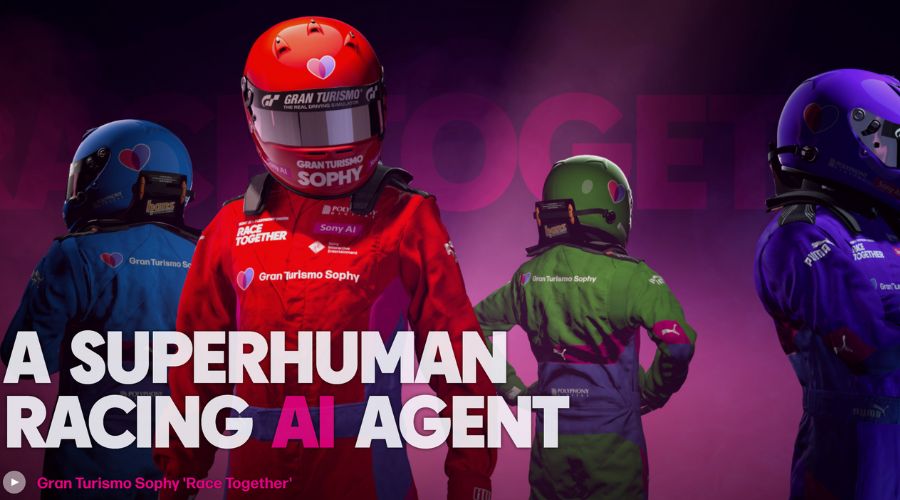
AI ethics in gaming raises concerns about creative authenticity, job displacement for artists and designers, bias in AI-trained systems, and intellectual property rights. The industry is moving forward with AI integration, but these ethical questions remain unresolved.
Environmental impact continues despite sustainability efforts. The industry must balance innovation with environmental commitments, and current trends favor innovation heavily.
현재 게임 기술의 상태
Gaming technology in 2025-2026 is in transition—cloud infrastructure improving but not perfected, AI integration expanding but raising questions, VR/AR finally viable but not yet ubiquitous, and next-gen hardware approaching but expensive.
The global gaming market’s projected $522 billion valuation represents not just entertainment but a technology testbed. Innovations in AI, cloud computing, graphics processing, and immersive experiences often emerge in gaming first before spreading to other industries. This pattern appears likely to continue.
For gamers, developers, and hardware manufacturers, the next few years represent a continuation of existing trends reaching maturity. The boundaries between console, PC, mobile, and cloud gaming are blurring. Accessibility is improving. Performance continues advancing. Costs remain a barrier for cutting-edge experiences.
기술은 발전하고 있습니다—가장 중요한 것은 사양만이 아니라 게임 경험을 개선하는 방향으로 발전하고 있는지 여부입니다. 사용자는 이러한 새로운 기술에 대한 선택과 참여를 통해 궁극적으로 이를 결정할 것입니다.